
blog, Garden Blog
Celebrate National Pollinator Month This June
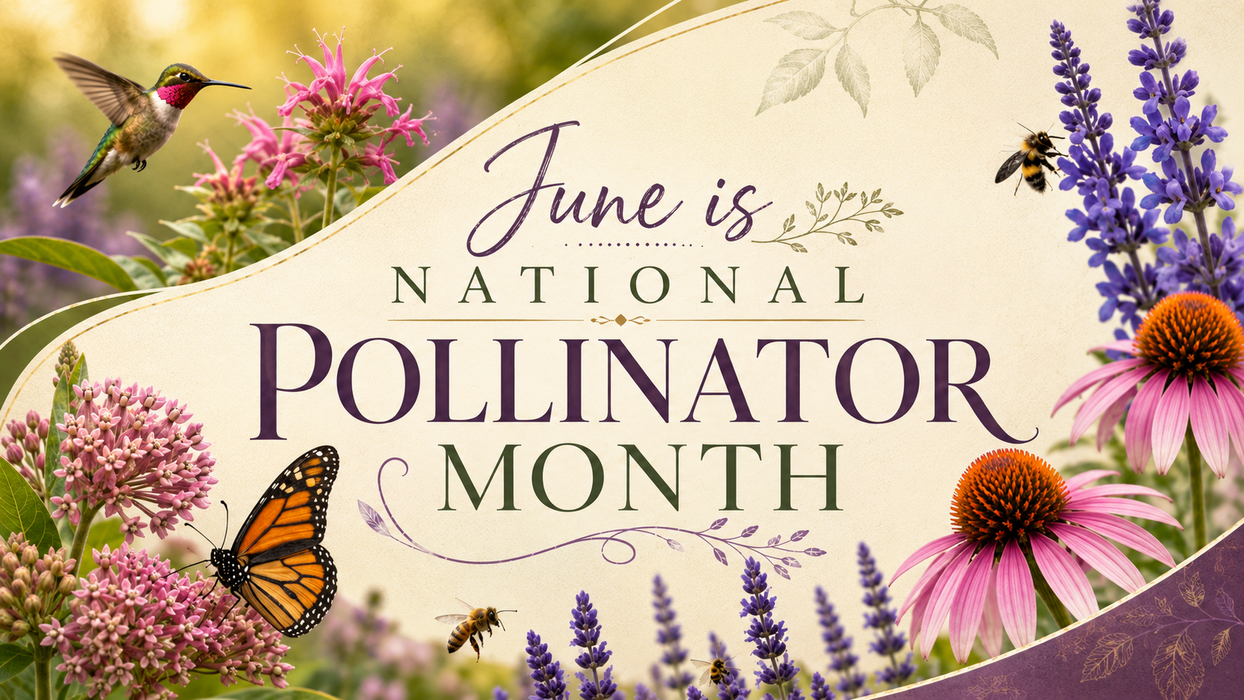
Jun
June is National Pollinator Month, a timely reminder that bees, butterflies, hummingbirds, moths, beetles, and other pollinators do far more than add movement and beauty to the garden. They help flowering plants reproduce, support local ecosystems, and play a direct role in the food we grow and enjoy. From backyard vegetable gardens to fruit trees, native perennials, and summer annuals, pollinators are part of the quiet work that keeps gardens productive and alive.
The national pollinator movement has grown through the work of organizations such as Pollinator Partnership, the National Wildlife Federation, the USDA, the U.S. Forest Service, the U.S. Fish & Wildlife Service, the National Park Service, and the Xerces Society. These groups promote pollinator education, habitat creation, native plant gardening, reduced pesticide use, and community awareness. National Pollinator Week, held each June, has become one of the best-known parts of this effort, giving gardeners, schools, communities, farms, and local businesses a chance to focus on simple steps that make a real difference.
For home gardeners, one of the best ways to participate is to plant a pollinator-friendly garden. It does not need to be large. A sunny border, a raised bed, a patio container, or a corner of an existing landscape can become valuable habitat when planted with the right mix of flowers.
Start with native plants whenever possible. Native perennials, shrubs, and grasses have evolved alongside local pollinators, making them especially useful for nectar, pollen, shelter, and host plants. Include flowers with different shapes and bloom times so pollinators have food from spring through fall. Plant in groups rather than single scattered plants; clusters are easier for bees and butterflies to find and use efficiently.
A successful pollinator garden should also include host plants. Milkweed, for example, is essential for monarch caterpillars, while many native trees and perennials support specific butterflies and beneficial insects. Avoid heavy pesticide use, especially when plants are in bloom, and consider leaving a few natural areas with bare soil, hollow stems, leaf litter, or grasses for nesting and overwintering insects.
Water can help too. A shallow dish with stones, a birdbath with a landing area, or damp soil can give pollinators a safe place to drink. Most importantly, think of your pollinator garden as a living system, not a one-season project. Each plant you add helps create a healthier, more resilient landscape.
FAQ
What should I plant first in a pollinator garden?
Start with native flowering perennials that bloom at different times of year. Add shrubs, herbs, and annuals for extra color and nectar.
Do pollinator gardens need full sun?
Many pollinator plants perform best in full sun, but there are also shade-tolerant native plants that support pollinators.
Should I use mulch?
Use mulch lightly. Some native bees nest in the ground, so leaving a few open soil areas can be helpful.
Can containers support pollinators?
Yes. Patio pots filled with nectar-rich annuals, herbs, and compact perennials can provide useful food sources, especially in small spaces.
